Grocery Store Overwhelm
How sensory overload at the supermarket destroys your food budget.
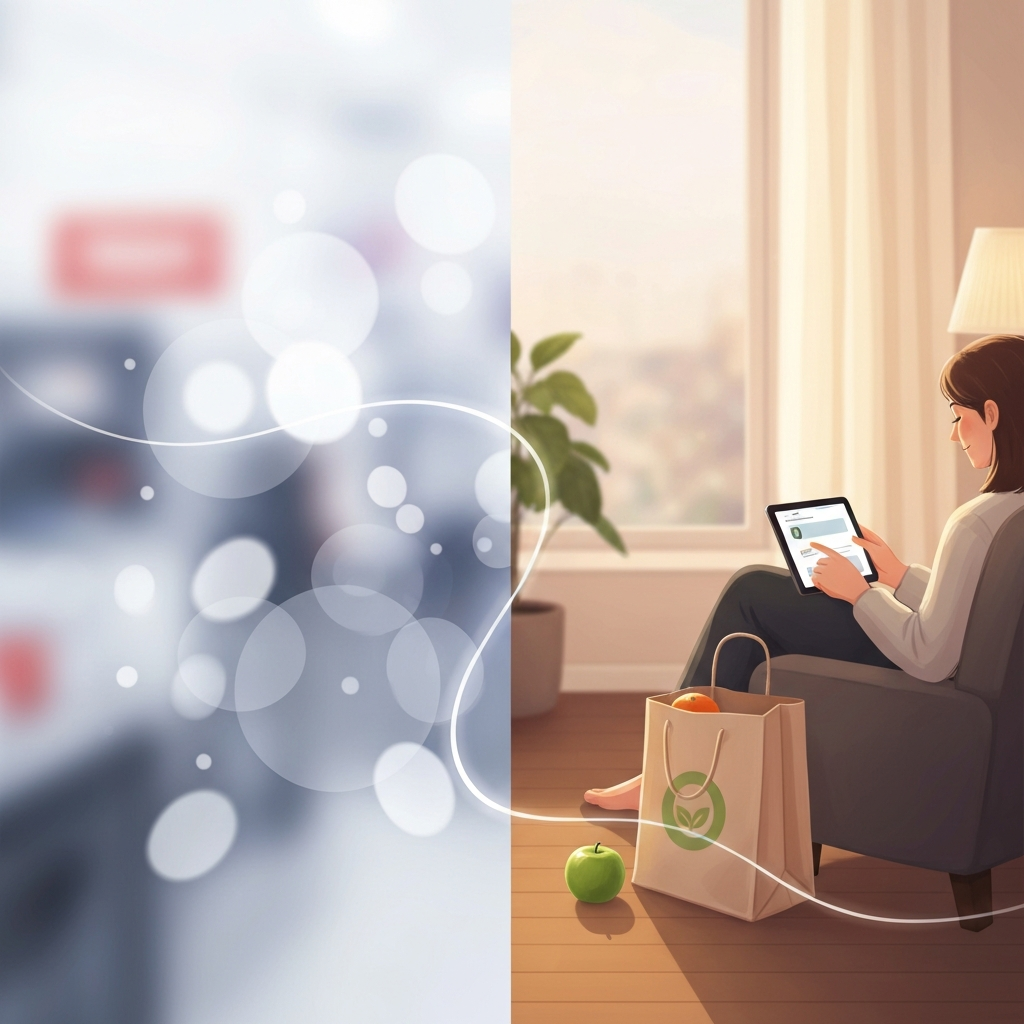
TL;DR (Too Long; Didn't Read)
- Supermarkets are hostile sensory environments (bright lights, noise, crowds).
- Sensory overload destroys executive function, leading to abandoned lists and impulse buys.
- Grocery delivery fees are often cheaper than the "Overwhelm Tax" of in-store shopping.
The Hostile Sensory Environment
Supermarkets are designed to maximize sensory input. Fluorescent lights, overlapping announcements, beeping checkouts, freezing aisles, and unpredictable crowds. For an AuDHD brain, simply walking through the doors requires an enormous expenditure of energy.
When your brain is fighting to process this sensory assault, the prefrontal cortex—the part responsible for decision making and impulse control—starts to shut down.
The "Overwhelm Tax"
You entered the store with a list, but under sensory duress, the list becomes impossible to follow. You grab pre-packaged, expensive comfort foods because they require zero decision-making. You abandon the vegetables because selecting them requires too much focus.
You leave the store having spent £80 on items that do not constitute a single cohesive meal. This is the Overwhelm Tax.
The ROI of Grocery Delivery
Many traditional budgeting experts advise against grocery delivery because of the £4 delivery fee. This is terrible advice for a neurodivergent brain.
Paying a £4 delivery fee to shop from your quiet living room prevents the £40 Overwhelm Tax of panic-buying in-store. It allows you to check your fridge while ordering and eliminates the sensory drain entirely.
How SafeSpend Protects Your Food Budget
SafeSpend's Daily Life allocation naturally accounts for these survival strategies. If paying for grocery delivery keeps you sane and prevents food waste, that £4 is an investment in your well-being, fully validated by your Honest Balance.